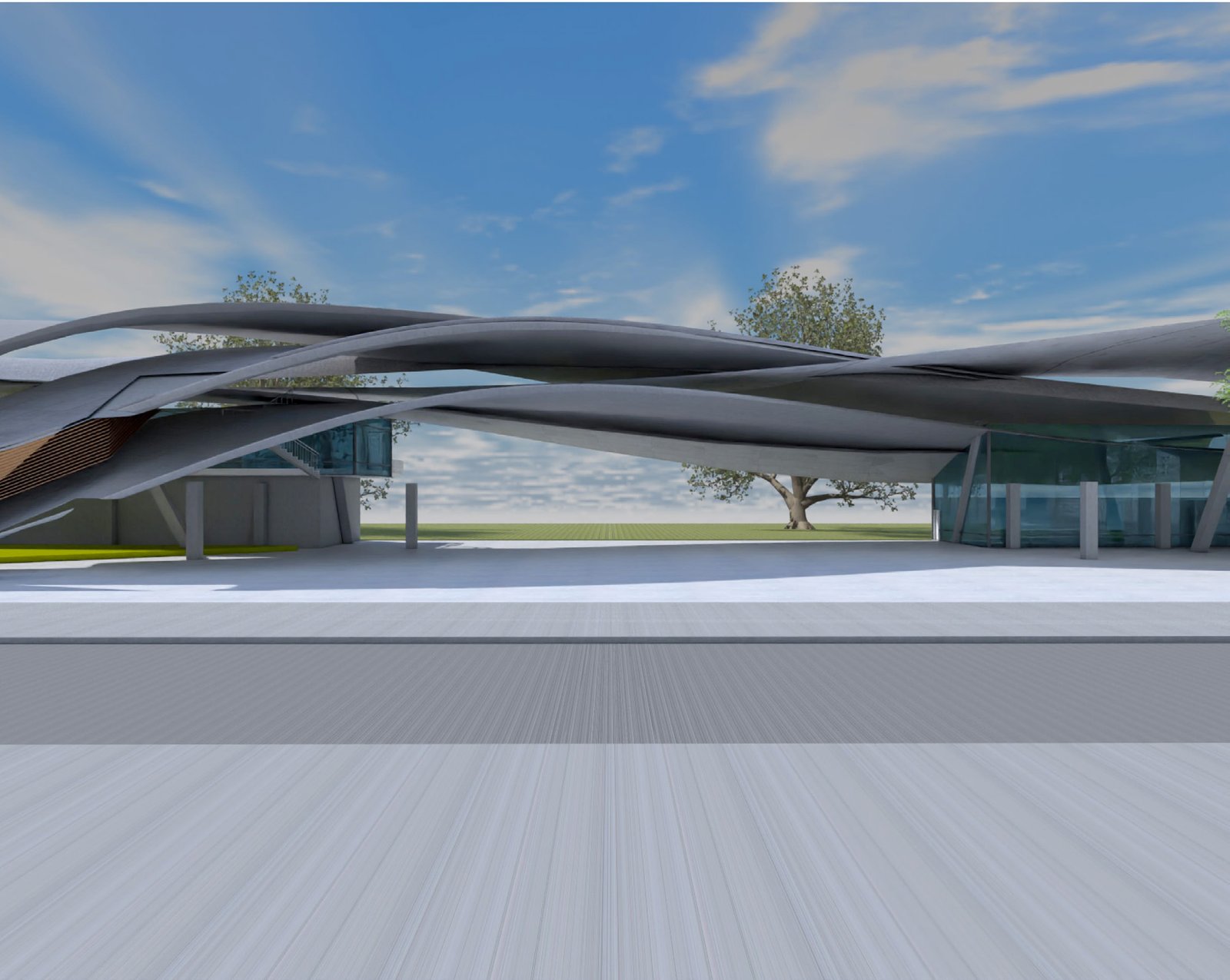
Instrument I · civic complex
Connective
Tissue
A library that refused the city grid — so the whole block could breathe.
descend
Instrument I · civic complex
A library that refused the city grid — so the whole block could breathe.
Designing from the question not asked.
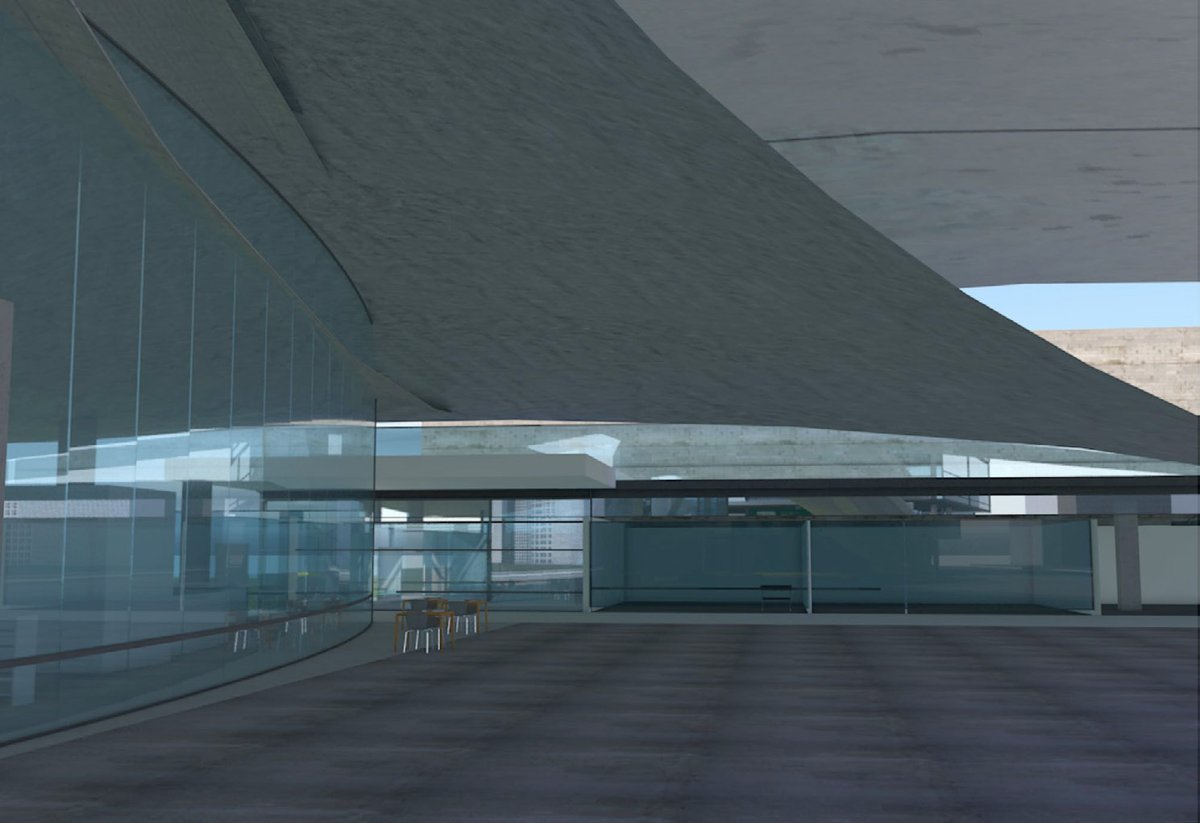
The brief wanted a building. The real problem was the space between buildings — the circulation, the pause, the passage to the park. So the design put its attention in the gaps: the connective tissue that lets a civic complex move as one body instead of four separate objects on a grid.
And the library — the final phase — deliberately breaks from the orthogonal street grid. It turns, it asserts, it commands a shift in perspective. Its defiance is the point: the journey to knowledge should ask something of you. A city within a city block.
Phase 1
The residential ground — the grain the complex grows from.
Phase 2
Vertical density, holding the block's edge.
Phase 3
The civic room — the place the tissue opens into.
Phase 4
Community center, studios, gallery, café, auditorium — and the one that breaks the grid.
Built in parts, so circulation could pass freely to the park to the south — through the connective tissue between them.
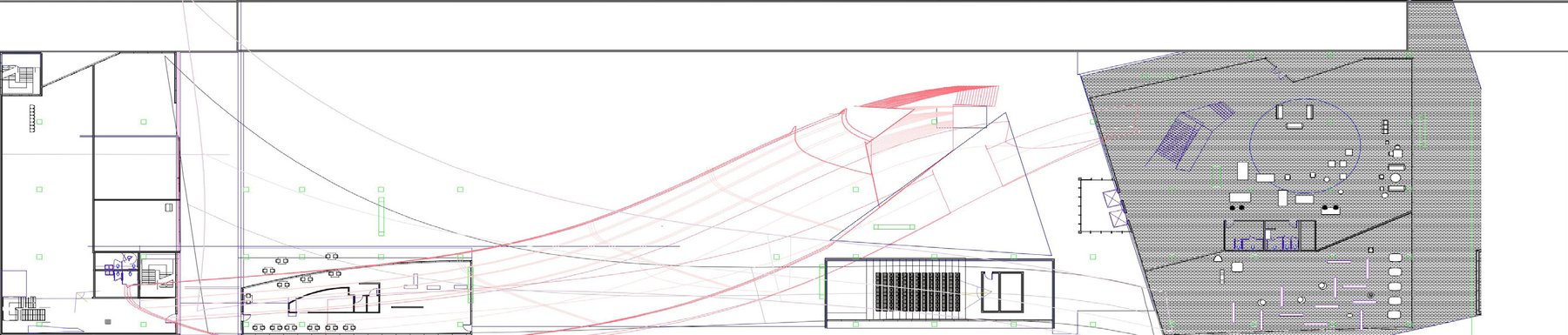
Before it was a plan, it was a sequence of bodies.
These are phenomenological studies — the first-floor plan overdrawn, again and again, with the figure moving through it. Where the drawing marks DISRUPTION, the body is made to slow, turn, crouch, look up. The architecture is tested not as form but as a passage that is felt — walked, paused in, moved against.
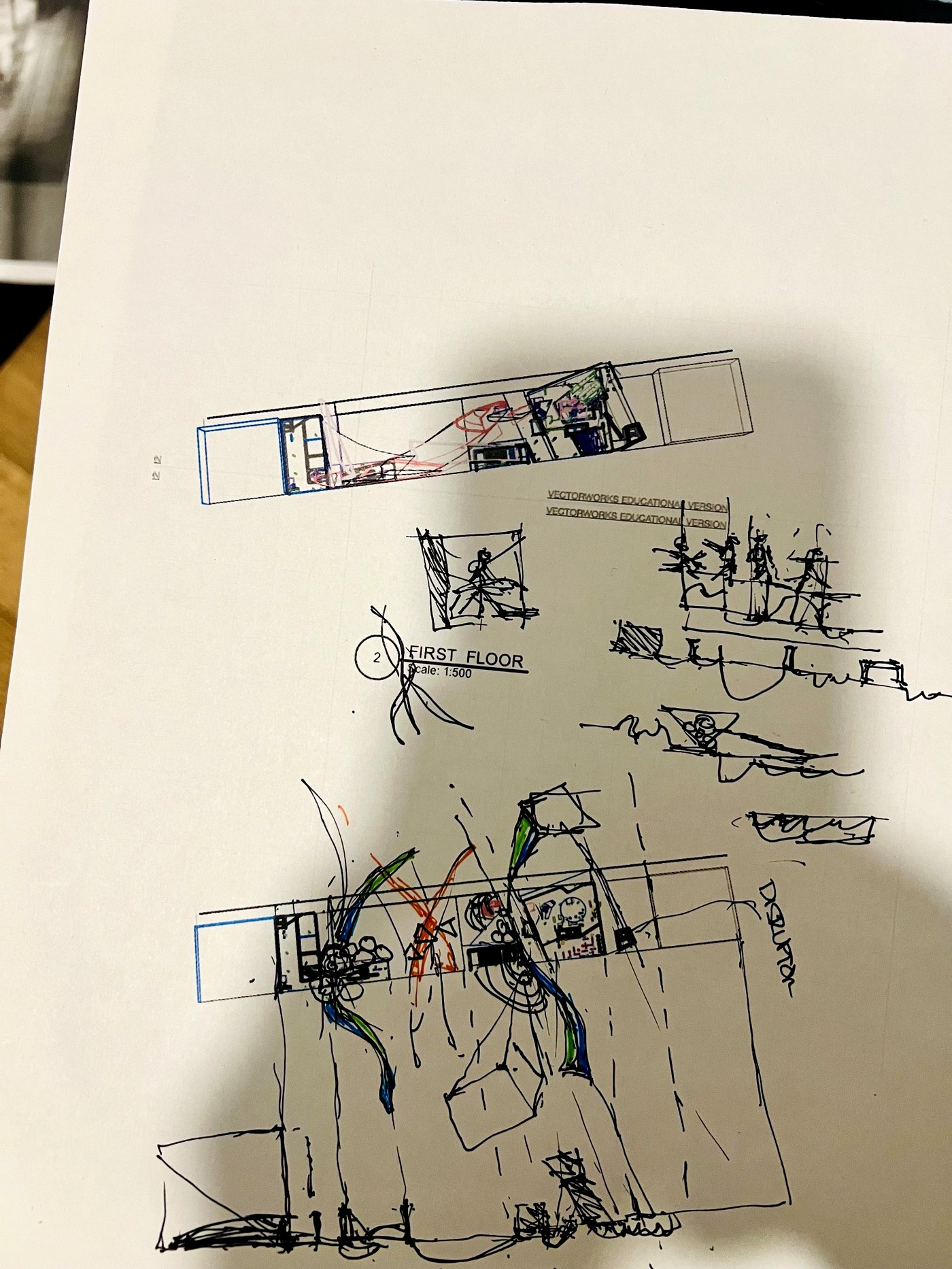
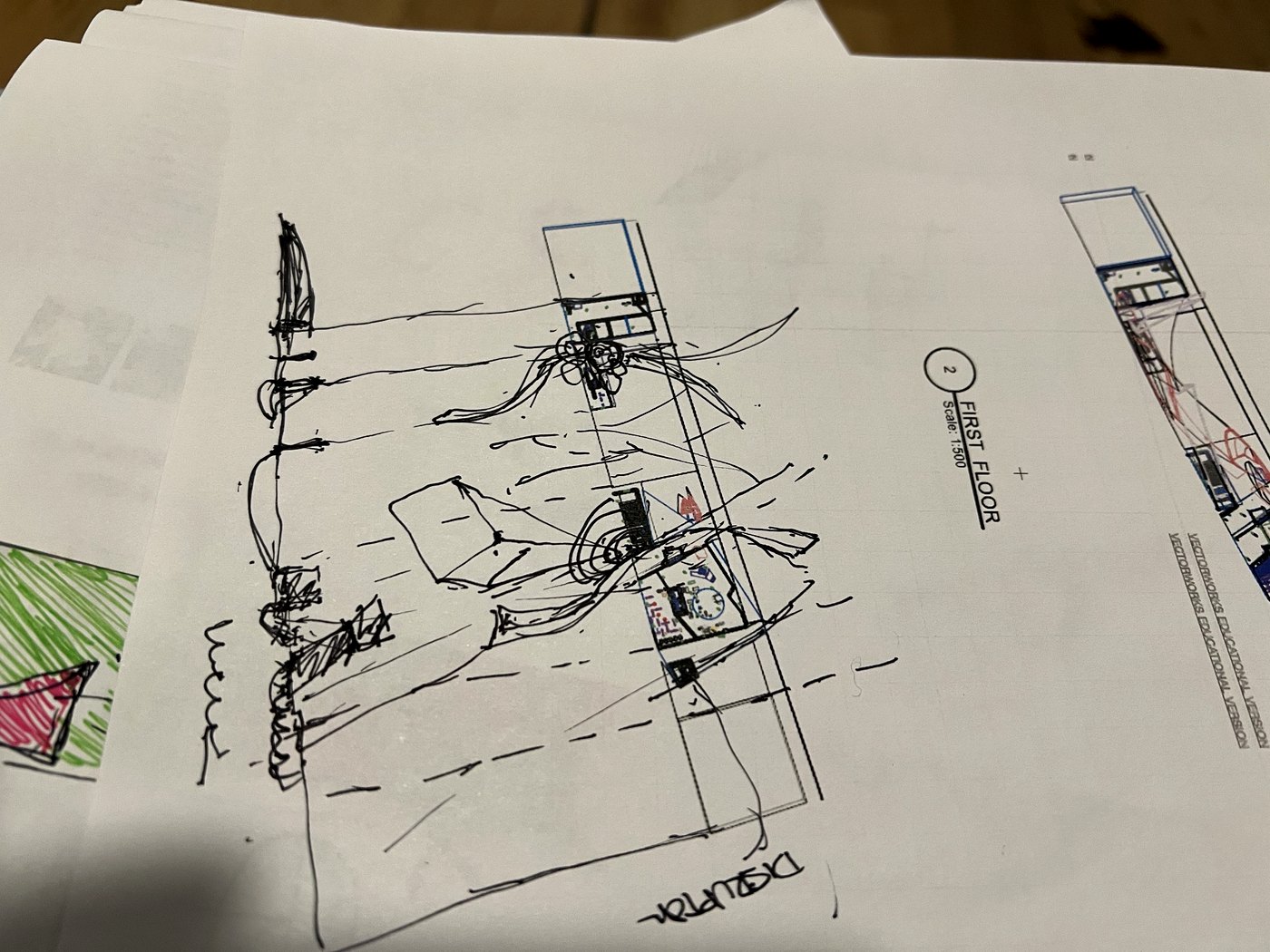
The plan is a score for how a body moves through it.
Reading the movement studies against the plan, four zones emerge — the building as a sequence of cognitive-emotional states a visitor passes through. Not rooms. Conditions. Each one asks a different posture of the body.
The held moment. Reading, study, the quiet core.
body — seated, lowered gaze, stilled; drawn inward.
Encounter, exchange — the gallery, the café, the loud edges.
body — upright, turning, gesturing; open to others.
The connective tissue itself — the passage that changes you between states.
body — walking, pivoting, slowed at the turn; mid-change.
The exhale. The park beyond, reached through the building, not around it.
body — loosened, reclined, gaze outward; released.
The library as the parent of knowledge.
In the diagram that organized the scheme, the studios and the library sit in polarity — the makers and the kept — resolved through the shared program between them. The library takes primacy not by size but by posture: it turns off the grid, becomes the thing you orient toward, the parent you have to make a journey to reach. Enlightenment, the scheme argued, requires a deliberate shift in perspective — so the architecture makes you take one.
This is where the refusal of the grid begins.
Everything after it — the networks over grids, the systems read as relationships, the fragility that lives between the parts — is already here, in a library that turned to face the park. Instrument I. The first time the structure broke on purpose.
↩ back to the field